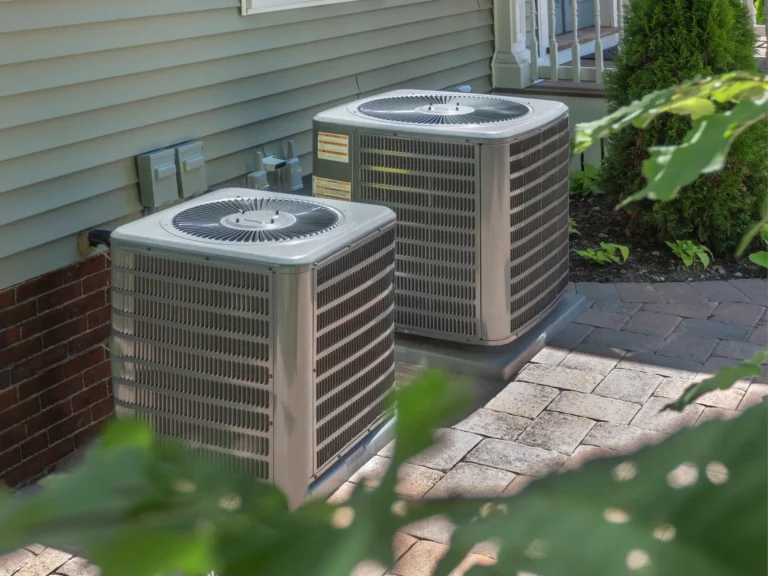
A failing air conditioner rarely gives up all at once. More often it signals the end of its life through a series of small warnings: rising energy bills month after month, uneven cooling between rooms, strange noises during startup, and repair visits that grow more frequent with each passing summer. By the time a Henderson homeowner starts shopping for a replacement, the old unit has usually been limping along for a season or two longer than it should have. Recognizing that moment, and acting on it before a complete breakdown during a July heat wave, is one of the smartest decisions you can make for your home comfort and your budget.
At McCoy's Heating & Air, we have guided thousands of families through this exact decision. We understand that replacing a central air conditioner feels like a major undertaking, and we work hard to make it clear, straightforward, and free of pressure. Below, we walk you through how to know when replacement makes more sense than repair, what the process looks like, and the technical considerations that separate a mediocre installation from one that lasts for well over a decade.
Repair or Replace: How to Decide
The most common question we hear is whether a given system is worth fixing. There is no single answer that fits every home, but a few guidelines help you weigh the options clearly. A good starting point is the age of the equipment. Most central air conditioners are built to last between 12 and 15 years. If your unit is approaching or past that range and needs a costly repair, putting money into it often delays an inevitable replacement rather than preventing one.
Another factor is the type of repair required. Replacing a worn capacitor or a contactor is routine and affordable. Replacing a failed compressor or repairing a refrigerant leak in an aging coil, on the other hand, can approach the cost of a significant portion of a new system. When a major component fails on an older unit, replacement usually delivers far better long-term value. Consider these signs that point toward replacement rather than another repair.
- Frequent breakdowns: if you have called for service two or more times in the last couple of seasons, the pattern is unlikely to improve.
- Rising energy bills: an aging system loses efficiency over time, and you end up paying more each month for less comfort.
- R-22 refrigerant: older systems that use the phased-out R-22 refrigerant are increasingly expensive to service, since the refrigerant is no longer produced.
- Uneven temperatures: if some rooms stay warm while others cool fine, the equipment may no longer be able to keep up with the demand of your home.
When you call McCoy's Heating & Air for an evaluation, our technicians give you an honest assessment. If a repair is the right call, we will tell you so. We have built our reputation on putting your interests first, and nearly 2,000 five-star Google reviews reflect that we treat every home the way we would treat our own.
Matching the Right System to Your Henderson Home
Once you decide to replace, the next step is selecting equipment that fits your home. This is where many replacements go wrong. A unit that is too small struggles on the hottest days and runs constantly, while a unit that is too large cools quickly but shuts off before it can pull humidity out of the air, leaving your home clammy and uncomfortable. Correct sizing is a calculation, not a guess.
Our team performs a load calculation that accounts for the square footage of your home, the quality and amount of insulation, the number and orientation of windows, ceiling heights, and the layout of your ductwork. In the West Tennessee climate, where summer humidity runs high, proper sizing matters as much for moisture control as it does for temperature. A correctly matched system keeps your home both cool and dry through the longest stretches of August.
We also help you understand efficiency ratings. Air conditioners are rated by SEER2, which measures how much cooling you get per unit of energy consumed. A higher SEER2 rating means lower operating costs, though the right balance between upfront investment and long-term savings depends on how long you plan to stay in your home and how heavily you use your system. We walk you through those tradeoffs so your decision fits your situation rather than a one-size-fits-all recommendation.
What Our Replacement Process Looks Like
We have refined our replacement process over more than four decades so that it runs smoothly from the first visit to the final walkthrough. Knowing what to expect takes the anxiety out of the project and helps you plan around the installation day.
- In-home assessment and free estimate: a technician inspects your current setup, performs the load calculation, examines your ductwork, and discusses your comfort concerns and budget before recommending options.
- System selection: we present equipment choices that fit your home and explain the differences in efficiency, features, and warranty coverage so you can choose with confidence.
- Removal and installation: on installation day, our team safely recovers the old refrigerant, removes the existing equipment, and installs the new condenser, evaporator coil, and any related components with care for your property.
- Testing and startup: we verify refrigerant charge, check airflow, confirm electrical connections, and run the system through a full cycle to make sure everything performs to specification.
- Walkthrough: before we leave, we show you how to operate your new thermostat and answer any questions so you feel comfortable with your investment.
Most single-system replacements are completed in a single day. Our installers clean up thoroughly and treat your home with respect, because customer satisfaction is our number one concern.
The Technical Details That Make a Replacement Last
The equipment you choose matters, but the quality of the installation determines whether that equipment delivers on its promise. Several technical steps separate a professional job from a rushed one. When refrigerant lines are not properly evacuated of air and moisture, acids can form inside the system and shorten the life of the compressor. We pull a deep vacuum and verify it holds before we introduce refrigerant, protecting the heart of your new system from day one.
We also measure and adjust the refrigerant charge to the manufacturer’s exact specification rather than estimating by feel. An undercharged or overcharged system runs inefficiently and wears out early. Airflow is equally important. If your existing ductwork is undersized, leaky, or poorly balanced, even the best equipment will underperform. During our assessment we identify these issues and recommend corrections so your new system breathes properly. Our technicians are EPA certified and NATE certified, and they handle refrigerant and electrical work in full compliance with current standards.
Why Henderson Homeowners Trust McCoy's Heating & Air
McCoy’s Heating and Air has provided quality service in the Jackson area and West Tennessee since 1981. We remain locally owned and operated after 45 years and counting, and we hold an A+ rating with the Better Business Bureau. We are dedicated to taking care of our employees and our customers, and we promise high-quality products installed and serviced by professionals.
We service all makes and models, offer free estimates on new equipment, and back our work with the kind of attention that only a long-standing local company can provide. Along with cooling, our experienced team of plumbers can handle any plumbing needs your home may have, which means one trusted company can care for more of your home. We proudly serve Henderson along with Jackson, Humboldt, Henderson, Alamo, Bells, Cedar Grove, and Medina, TN, and we would be glad to help you plan a replacement that keeps your family comfortable and safe for years to come.
When your air conditioner is ready to be replaced, reach out to McCoy's Heating & Air for a free, no-pressure estimate. We will give you honest guidance, a correctly sized system, and an installation done right the first time.