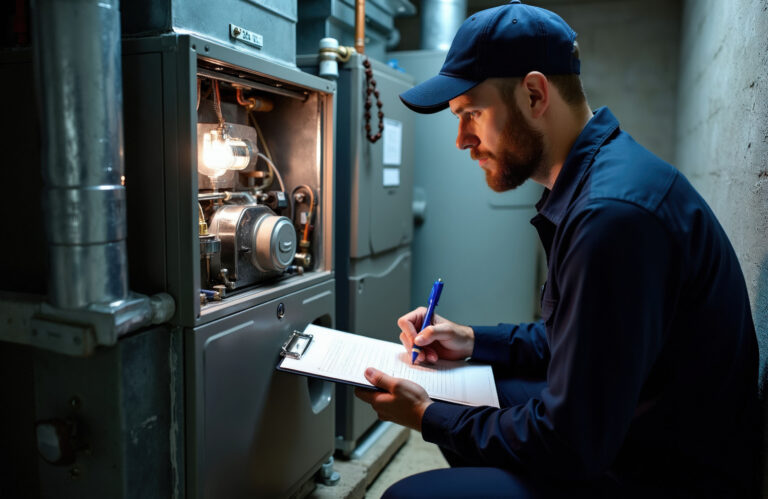
A sudden drop into the 20s or low teens tests every weak point in your heating system at once. The time to find those weak points is now, not at 10 p.m. on the coldest night of the year when the furnace will not start. Below are seven specific things to check before a Tennessee cold snap arrives, along with the reasons each one matters and what we look at when we service a system.
1. Check and Replace the Air Filter
A dirty filter is the single most common cause of furnace problems we find during winter service calls. When the filter clogs with dust and debris, airflow across the heat exchanger drops. The furnace then runs hotter than designed, which can trip the high-limit safety switch and shut the unit down. In the worst cases, repeated overheating cracks the heat exchanger, a repair that often costs more than the problem was worth to ignore.
Replace a standard one-inch filter every 30 to 90 days during the heating season. Homes with pets, multiple occupants, or high dust levels need more frequent changes. If you use a thicker media filter, follow the manufacturer’s interval, usually every six months to a year. A clean filter protects the blower motor, keeps airflow steady, and lets the furnace reach set temperature without straining.
2. Test the Thermostat Before You Need It
Set your thermostat to heat and raise the temperature a few degrees above the current room reading. The furnace should respond within a minute or two. If nothing happens, or if the system short-cycles on and off, the problem may be the thermostat itself, its wiring, or dead batteries in a battery-powered model. Programmable and smart thermostats sometimes lose their settings after a power interruption, so confirm the schedule still matches your routine.
A thermostat that reads the wrong temperature makes the whole house uncomfortable and drives up energy use. If you have recently moved a thermostat or replaced one yourself, verify that the heat and cool wires are landed correctly. Our technicians calibrate thermostats as part of a routine tune-up and can recommend an upgrade if your current unit is outdated or no longer accurate.
3. Inspect the Vents and Return Grilles
Furniture, rugs, and curtains have a way of migrating over supply vents during the warmer months. Blocked supply registers force the furnace to work against restricted airflow, which raises internal temperatures and lowers comfort in the rooms you actually use. Walk through every room and confirm that supply and return openings are clear.
Return grilles matter just as much as supply vents. The return pulls air back to the furnace, and a blocked return starves the blower the same way a dirty filter does. Keep at least a few inches of open space around every grille. If certain rooms always feel colder than others, the cause may be duct balancing or leakage rather than the furnace itself, and that is something we can measure and correct.
4. Listen for Unusual Sounds and Watch for Odors
Pay attention the first few times your furnace runs this season. A faint burning smell on the first startup is normal as dust burns off the heat exchanger, and it should clear within a few minutes. A smell that persists, or any odor of gas, is a reason to shut the system down and call for service immediately.
Sounds tell a similar story. Here are noises that deserve attention:
- Grinding or squealing: often a sign of a worn blower motor bearing or a failing belt.
- Rumbling on startup: can indicate a dirty burner or a delayed ignition that lets gas build before it lights.
- Rattling or banging in the ductwork: usually loose panels or sections of duct, but sometimes a symptom of airflow problems.
- Clicking that does not lead to ignition: a failed igniter or a problem in the control sequence.
Catching these early lets us repair a small part before it damages something larger. We service all makes and models, so the brand of your furnace does not limit the help we can provide.
5. Confirm the Ignition and Flame Are Working Correctly
Modern gas furnaces use either a hot surface igniter or an intermittent spark to light the burners. These components wear out and are a frequent failure point during the first hard freeze. A furnace that tries to light several times before firing, or one that fires and then shuts off quickly, usually has an ignition or flame-sensing fault. The flame sensor in particular collects a film of residue over time and needs periodic cleaning to read the flame correctly.
The flame itself should burn steady and blue. A yellow, flickering, or lifting flame points to incomplete combustion, which produces carbon monoxide. This is not a check to attempt yourself beyond a visual glance. If the flame looks wrong, keep the unit off and schedule service. Our technicians are EPA certified and NATE certified, and inspecting the combustion process safely is a core part of every heating tune-up we perform.
6. Verify Carbon Monoxide Detectors Work
Any home with a gas furnace needs working carbon monoxide detectors. Winter is when furnaces run the most and when windows stay shut, so this is the season when a combustion problem becomes most dangerous. Press the test button on every detector and replace batteries on a fixed schedule. Detectors themselves expire, usually after five to seven years, so check the date printed on the back of each unit.
Carbon monoxide is odorless and colorless, which is exactly why detection equipment matters. A cracked heat exchanger can leak combustion gases into the air stream without any obvious warning. During a full inspection we examine the heat exchanger for cracks and corrosion and test for proper venting, but a functioning detector is your essential last line of protection between service visits.
7. Schedule a Professional Furnace Tune-Up
The six checks above are things any homeowner can do. A professional tune-up covers the parts you cannot safely reach or measure. When we service a furnace before winter, we clean the burners, inspect and clean the flame sensor, test the igniter, measure gas pressure, check the heat exchanger, verify safety switches, lubricate moving parts where needed, and confirm the system reaches temperature efficiently.
A furnace that is tuned runs cleaner, uses less fuel, and is far less likely to fail during a cold snap. It also keeps manufacturer warranties valid, since many require documented annual maintenance. We provide free estimates on new equipment and give you a clear picture of your current system’s condition so you can plan ahead rather than react to a breakdown.
Why Jackson Homeowners Trust McCoy's Heating & Air
McCoy’s Heating and Air has provided quality service in the Jackson area and West Tennessee since 1981. We are still locally owned and operated, which means the people answering your call and arriving at your door are part of the same community you live in. Across Jackson, Humboldt, Henderson, Alamo, Bells, Cedar Grove, and Medina, TN and the surrounding region, families count on us to keep their homes warm through every winter.
Our commitment shows in the details. We hold an A+ rating with the BBB, our factory-trained technicians are EPA and NATE certified, and nearly 2,000 five-star Google reviews reflect our focus on customer satisfaction. We promise high-quality products installed and serviced by professionals, and we back that promise with the care that comes from 45 years in the same business. When a Tennessee cold snap arrives, you want a furnace that is ready and a company you can reach, and McCoy's Heating & Air is here to make sure both are true.
Get Ahead of the Cold
The best time to prepare a furnace is before the first hard freeze, while there is no pressure and no emergency. Running through these seven checks now gives you time to address small issues before they grow. If anything on the list raises a concern, or if you simply want the confidence of a professional inspection, reach out to schedule your heating tune-up.
We service homes and businesses throughout West Tennessee, and our experienced team also handles plumbing needs when they come up. One call connects you with a company that has kept this region comfortable for more than four decades. Let McCoy's Heating & Air make sure your furnace is ready for whatever this winter brings.